

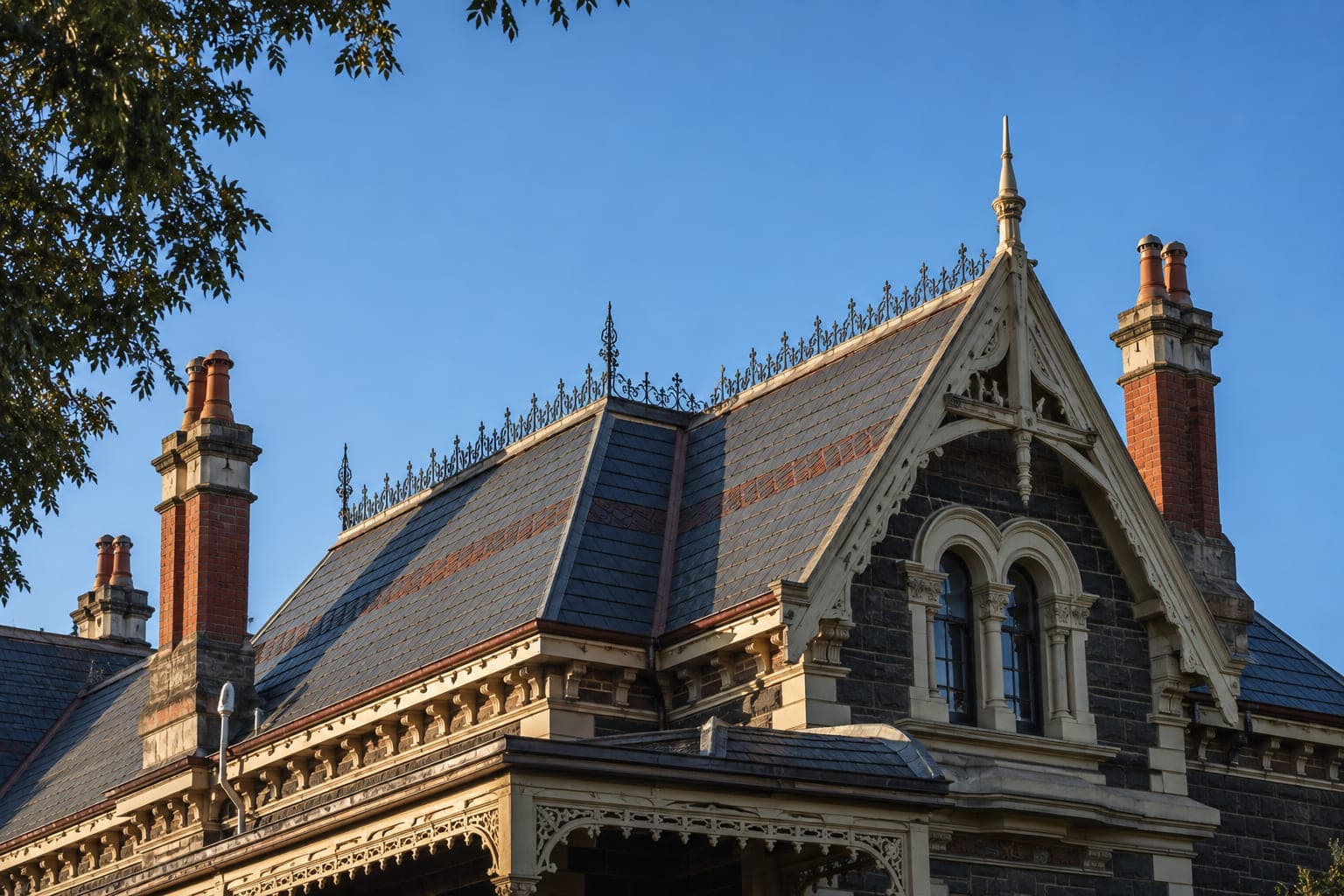
Heritage Roofing for Melbourne's Period Homes
Heritage roofing specialists for Melbourne's period homes — slate, terracotta and sympathetic restoration that preserves what makes the building worth keeping.
Request a quote
Tell us about the roof and we'll come back with a straight, specialist answer.
- Natural Slate
- From Cupa Pizarras
- 100+yr
- Natural Slate lifespan
- Warranty
- Workmanship & Products Guaranteed
Capability
Period roofs, done period-correct.
Heritage work is a different discipline to roofing. The material, the detail and the method all have to answer to the building.
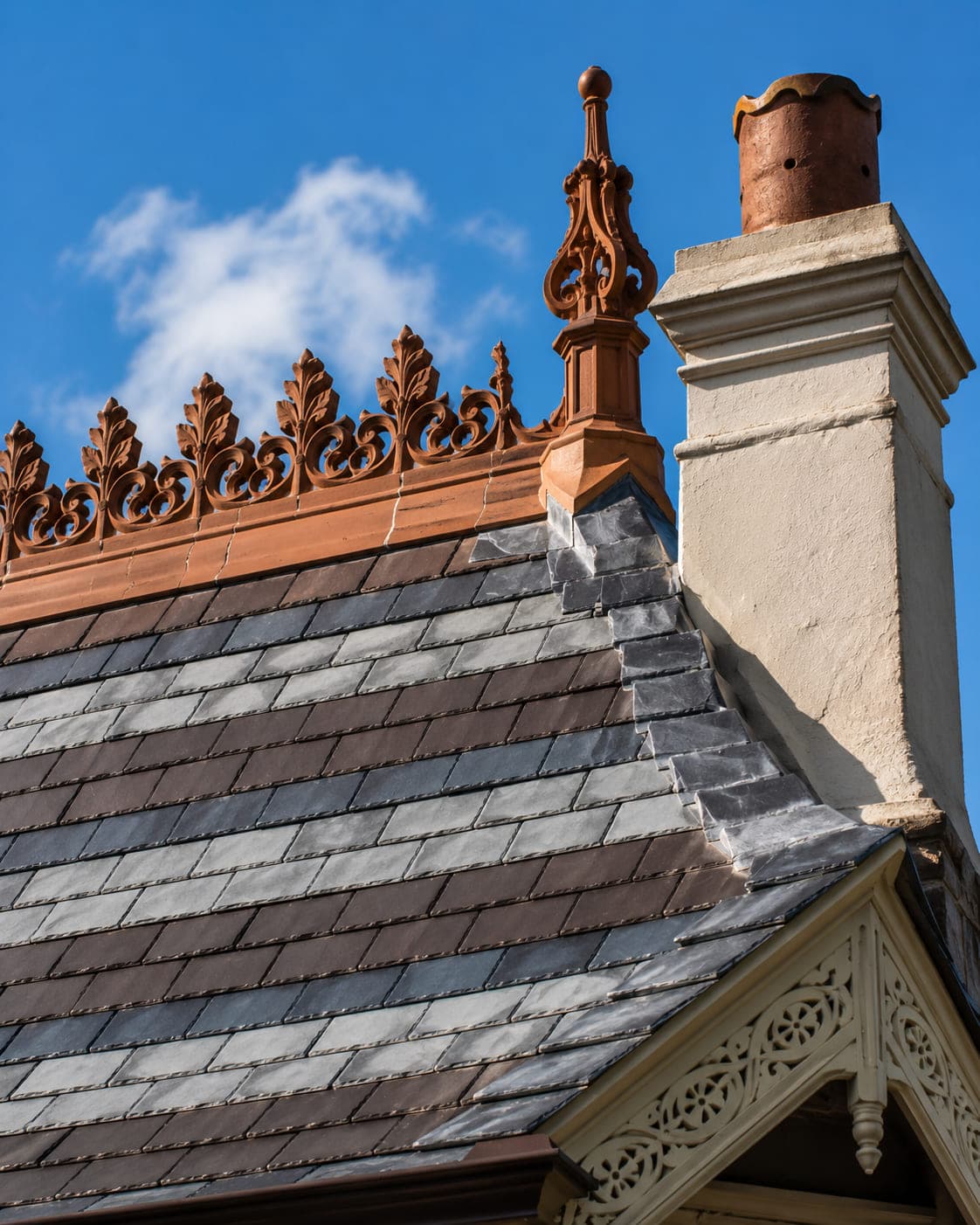
- Natural slate and terracotta on Victorian, Edwardian and Federation homes
- Period detailing — ridging, finials, leadwork, valleys and dormers
- Matching original material rather than substituting the nearest modern equivalent
- Working within heritage overlays and character requirements
- Documentation for councils, heritage advisors and insurers
Why it matters
A heritage roof is unforgiving of the wrong decision.
A period roof re-covered in the wrong material devalues the home and cannot be undone cheaply. The care is the point.
We have worked on Melbourne and Peninsula period homes since 1982. That length of exposure is what lets us match a slate to a roof laid a century ago — and know when a repair will show and when it will disappear.
Know your house
What period your roof is, and what it wants.
Melbourne's period housing stock falls into a handful of eras, and each one carries its own roof. Identifying yours is the first thing we do on site.
Victorian terrace, 1850–1900
Typical roofAs originally built
Welsh or Spanish slate, low pitch, cast-iron lacework, parapet gutters
What usually fails firstAfter 80–120 years
Parapet and box gutters, then the iron fixings behind them
Victorian villa, 1870–1900
Typical roofAs originally built
Banded slate in two colours, decorative ridge cresting, finials
What usually fails firstAfter 80–120 years
Ridge bedding and the cresting fixings, then valley leadwork
Federation, 1890–1915
Typical roofAs originally built
Unglazed terracotta Marseille tiles, terracotta ridging, deep gables
What usually fails firstAfter 80–120 years
Ridge pointing and cracked tiles around the gable ends
Edwardian, 1901–1915
Typical roofAs originally built
Slate or early terracotta, shingle-banded gables, tall chimneys
What usually fails firstAfter 80–120 years
Chimney flashings and the mortar in the gable barge
Interwar / Californian bungalow, 1915–1940
Typical roofAs originally built
Terracotta or early concrete tile, broad low-pitch gables
What usually fails firstAfter 80–120 years
Sarking-free valleys and the original wire ties
A guide, not a diagnosis — Melbourne homes were altered constantly, and a Victorian villa re-roofed in the 1960s presents very differently. We confirm what is actually up there at survey.
Heritage overlays
Working inside a heritage overlay.
If your property sits in a heritage overlay, the roof is not a free choice — and the approval process rewards getting the specification right the first time.
Councils are generally concerned with what is visible from the street and whether the work reads as original. That usually means retaining the existing material where it is sound, matching profile, colour and course gauge where it is not, and keeping the period detailing — ridging, finials, bargeboards — rather than quietly simplifying it.
- Retention of original material wherever its condition allows it
- Like-for-like matching on profile, size, colour and course gauge
- Period detailing reinstated, not substituted with a modern equivalent
- Photographic records before, during and after the work
- Specification and product documentation for the heritage advisor
- Reversible methods where the significance of the building calls for it
Matching
Why matching old slate is harder than it looks.
Two slates can be the same size, the same colour and still read as wrong from the footpath.
A century of Melbourne weather changes slate. It fades, it picks up lichen, it dulls. Set a brand-new slate of exactly the right specification into that roof and it reads as a patch — the right stone, the wrong age. Matching means accounting for how the original has weathered, not just what it started as.
Course gauge matters as much as the stone. Period roofs were laid to the slate sizes of their day, and modern metric sizes rarely land on the same lap. Get the gauge wrong and every course below the repair sits fractionally out for the rest of the roof's life. Where a match genuinely is not available, salvaged slate from the same era is usually the better answer, and we will say so.
Common questions
Questions we’re often asked.
Are slate roofs expensive?
Natural slate costs more upfront than concrete or terracotta tile, but it is the cheapest roof per year of service life. A correctly installed slate roof lasts 100 years or more, so it is typically the last roof the home will ever need. Cost is driven by roof size and complexity, access, slate grade and any structural work required — not by a fixed rate per square metre.
How long does a slate roof last?
A quality natural slate roof, properly installed, lasts well over 100 years. The slate itself often outlives the fixings and flashings, which is why periodic restoration — rather than full replacement — is usually all an older slate roof needs.
Can you walk on a slate roof?
Slate can be walked on, but only by someone who knows where and how to step. Individual slates crack under point loading, and damage is often not visible until it leaks. Any access should be left to a slate specialist using proper roof ladders and load spreading.
Can you install solar panels on a slate roof?
Yes, but the mounting must be designed for slate. Standard tile hooks crack slates and create leak paths. We work with installers to specify slate-appropriate fixings and flash them correctly so the roof's integrity and warranty are preserved.
How much are slate roof tiles?
Natural slate pricing varies according to origin, size, thickness and specification. We supply Spanish slate from CUPA PIZARRAS, selected for its provenance, consistency and proven performance across architectural and heritage roofing projects.
Trade supply is available to architects, builders and roofing professionals. Contact us for current pricing, availability and lead times.
How do you clean a slate roof?
Gently, and rarely. Slate does not need chemical cleaning or high-pressure washing — both damage the stone surface and drive water under the laps. Moss and debris are best removed by hand or with low-pressure water by someone who can access the roof safely.
Can you paint slate roof tiles?
No. Painting or sealing natural slate traps moisture in the stone, causes delamination and voids any material warranty. If a slate roof looks tired, the correct answer is restoration — replacing damaged slates and renewing flashings and ridging — not coating it.
Related
Other specialist work.
Have a project to price?
Send us your plans.
Heritage restoration, a new slate roof or an architect-specified build — send the plans or the roofing specification and you'll get a straight, specialist answer.
Specialist slate & tile roofing since 1982.
Prestige Slate & Tile Roofing Specialists — Since 1982